
Frame by Frame
The Art and Science of Stellar Storytelling

By Jason Schuler on May 11, 2025

In 2025, tariffs forced companies to confront a question many had avoided for years.
Where is value actually created?
Not where a product is shipped from.
Not where it is assembled.
But where the thinking, craftsmanship, and decision making happen.
That same question now applies to marketing.
As brands face tighter budgets, faster timelines, and a flood of outsourced and AI generated content, something important is becoming clear. Marketing is no longer judged only by what it says. It is judged by how and where it is made.
Your content has an origin story.
And whether you realize it or not, your audience can feel it.
The 2025 tariff conversation is not about politics here. It is about perception. It is about how origin influences trust, quality, and credibility. Consumers have always assigned meaning to labels like “Made in Italy” or “Crafted in Japan.” Those signals quietly shape expectations before a product is ever touched.
Marketing works the same way.
A brand video created without context, without proximity to the business, and without understanding the audience often feels generic. Not because the production was bad, but because the decision making happened too far from the brand itself.
This is not an argument against global tools or modern technology. It is a reminder that creative value is not neutral. Where ideas are shaped matters. Who asks the questions matters. And how closely a creative team understands your culture, customers, and community directly impacts the final result.
In an era where content is everywhere, origin has become part of the message.
And smart brands are starting to pay attention.
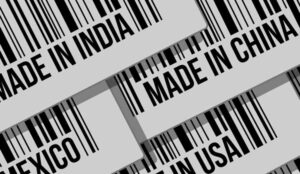
It wouldn’t exactly scream premium, now would it?
Most marketers don’t think of content creation as something with an origin story. But it is. And where it’s made, who makes it, how connected they are to your team & your audience—shapes everything…tone, speed, quality, outcome. The message may say one thing, but the process speaks volumes about who a brand really is.
Let’s get one thing straight: local doesn’t mean small. It means specific. Intentional. Rooted in the environment it’s built to serve.
Start thinking about content like a product; with an origin, an assembly process, and a level of craftsmanship, and it forces a bigger question:
Where should we be making this?
(not just for convenience, but for alignment, accountability, and results)
“Made in New Jersey” isn’t just a location—it’s a competitive edge. Not just because it’s close. But because it’s economically, creatively, and logistically built for production!
Before Hollywood was Hollywood, there was New Jersey.
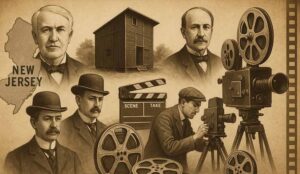 It’s true! And way more than an interesting piece of trivia—it’s legacy. Thomas Edison built the first motion picture studio in West Orange. Fort Lee was once the capital of silent film. Long before the Walk of Fame, New Jersey was the proving ground for cinematic innovation. The industry started here because the region had what creators needed: talent, innovation space, proximity, and momentum.
That spirit hasn’t disappeared. It’s evolved.
Today, New Jersey is home to Emmy-winning crews, state-of-the-art studios, and one of the country’s most competitive film incentive programs. You get serious production talent, the grit of the East Coast, and access to NYC. All without the price tag or red tape.
If you’re a brand producing content with impact, there’s something powerful about making it in the place where the industry was born. It’s not just strategic. It’s a nod to the craft.
In 2025, the U.S. economy is being reshaped by rising tariffs, geopolitical tension, and shifting global trade policies. For New Jersey businesses, the impact is real. In the first quarter alone, more than 3,600 layoffs were reported—more than double the same period in 2024. At the same time, New Jersey’s Corporation Business Tax revenue declined 5.4% year-over-year (NJ Chamber of Commerce).
 When uncertainty spikes, the first instinct is often to cut marketing. But history shows that’s a short-sighted move. Brands that maintain—or even increase—their presence during downturns often gain market share and customer trust at a lower cost (Harvard Business Review).
And here’s the twist: while large-scale productions can take advantage of the NJ film tax credit, brands of all sizes can benefit from local production. In a climate of hesitation, smart marketers double down. Investing in video marketing right now, while competitors go quiet, isn’t risky…It’s smart. It’s how you grow while others retreat.
Filming in New Jersey isn’t just about location. It’s a financial and creative win.
The New Jersey Film and Digital Media Tax Credit Program offers:
But it’s not just about savings. You’re tapping into an infrastructure built to rival major markets:
New Jersey has become a serious player in national media. And with potential tariffs coming on movies made outside of the US, you might just be overspending anywhere else.
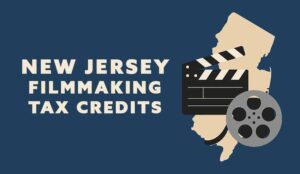
These tax incentives are designed for large-scale film, TV, and digital media productions with budgets of at least $2 million. To qualify, at least 50% of production spend must be in-state, and projects must hire local full-time staff (NJEDA Program Guide).
Our New Jersey filmmaking division has worked on these types of productions, enabling major savings for project funders. But for most of our NJ based video marketing projects, especially short-form commercials or social media content, these tax incentives don’t apply.
Nevertheless, you still win when you create here in New Jersey, because in brand marketing, your edge isn’t just tax-based. It’s speed, quality, and trust.
Most branded video content & corporate films won’t require a blockbuster production budget. Typically these types of productions are fast, focused, and deadline driven. Product launches. Recruitment videos. A culture story. A CEO message filmed on Thursday that needs to post by Friday afternoon.
While these productions will most likely NOT qualify for a tax credit as discussed above—they still benefit from being produced close to home. Because the second you send them out-of-state (or worse, out-of-context) you start paying hidden tariffs.
We’re not talking about actual customs levied. But rather negative side effects that tarnish the final result:
These are the real tariffs of outsourcing creative work. They don’t show up on a line item…They show up in your edit. And in your ROI.
One more reason to keep production local: impact.
Filming in New Jersey supports real jobs, real studios, and a creative economy that’s been here since the start. You’re hiring professionals who care about their craft. You’re investing in vendors who reinvest in gear, people, and process.
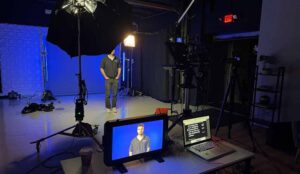
At Awakened Films, we live this. We’re a New Jersey incorporated, women-owned company with a bricks and mortar studio near Morristown. We collaborate with local creatives. We empower NJ based brands, corporations, schools and nonprofits who care about their message. And we believe great production isn’t just what you make—it’s how and where you make it.
Next time you watch a branded video, ask yourself: Where was this made? Who made it? Could it have been better—faster, sharper, more intentional—if it had been made here?
We think the answer might just be yes.
Because content doesn’t just communicate what your brand stands for. It reflects where you stand.
And if it had to wear a label, wouldn’t you want it to say:
“Crafted with care. Made in New Jersey.”
We can make that possible for your Garden State organization; reach out today.
What does the 2025 tariff conversation have to do with marketing?
The relevance is not about policy. It is about perception. Tariffs highlighted how much origin influences trust and value. Marketing works the same way. Where content is created and who creates it impacts how audiences interpret quality, authenticity, and credibility.
What does “content origin” mean in marketing?
Content origin refers to where creative decisions are made. That includes who develops the concept, who writes the message, who directs the visuals, and how closely the creative team understands the brand. It is less about geography and more about proximity to the business and its audience.
Why does locally produced marketing content often perform better?
Local teams understand regional culture, customer expectations, and business nuance. This often leads to clearer messaging, fewer revisions, and stronger emotional connection. For many brands, especially in New Jersey and the tri-state area, local production creates more authentic storytelling.
Is outsourcing marketing content always a bad idea?
Not at all. Outsourcing can be effective for certain tasks or scale needs. Problems usually arise when strategic thinking and storytelling are separated from the brand itself. The most successful campaigns balance efficiency with creative alignment.
How does video production influence brand trust?
Video is one of the strongest trust-building tools available. Viewers subconsciously evaluate tone, pacing, authenticity, and emotional realism. When a video feels disconnected from the brand, trust drops. When it feels grounded and intentional, trust increases.
Why does marketing feel generic today?
Many brands rely on the same templates, stock visuals, and AI generated scripts. When decision-making happens far from the brand’s real story, content starts to blend together. Differentiation comes from clarity, context, and intentional storytelling.
How should businesses think about video marketing in 2026?
Businesses should treat video as a long-term brand asset, not a one off deliverable. Strategy, storytelling, and distribution should be considered together. Video works best when it reflects real people, real environments, and a clear understanding of the audience.
What role does New Jersey play in modern video production?
New Jersey has a deep production history and a strong modern creative ecosystem. For regional brands, working with local video teams offers logistical efficiency, cultural alignment, and high production quality without the friction of distant collaboration.
How can a brand avoid sounding like everyone else online?
By slowing down decision-making at the strategy level. Asking better questions. Understanding the audience more deeply. And choosing creative partners who take time to learn the brand rather than simply execute a checklist.
