
Frame by Frame
The Art and Science of Stellar Storytelling

By Jason Schuler on December 15, 2025
The lights are on. Tables are dressed in linen. The team actually showed up (miracle). The line is hot and ready. The menu has been tested, tuned to perfection. Everything is set.
Then the clock hits 6:00 p.m.
And that familiar worry creeps in. Where is the buzz? Where are the covers? Why does the dining room sound like a slow Tuesday? How are we supposed to make payroll, or food cost, or anything at all, if these tables stay empty??
“Is it still possible to have a waitlist in 2026?”
Continue reading to learn more about Restaurant Social Media Marketing Strategies In 2026.

The restaurant industry is massive, but competition is fiercer than ever. There are over 1 million restaurant locations in the U.S., with over $1 trillion in forecasted sales, and yet labor costs and food prices are seriously eroding profit margins.
A few years ago people chose restaurants after reading long reviews or asking friends for recommendations. Today the choice is made in seconds. Diners judge a restaurant by what they see on their phone before they ever book a table. 74% of people now check Instagram, TikTok, or Google Business Profile to decide where to eat.
Diners are looking for a place that offers The answer comes from recent visuals, likes and shares. If your last post is from six months ago, customers assume your momentum faded. If the feed looks inconsistent, they question whether the experience will be inconsistent too.
Younger diners expect to see short videos, chef personality, and the energy of a dining room. They want transparency. They want to know what the food looks like right now, not in a staged photo from years ago.
Older diners shifted too. They may not post, but they browse to validate choices. They trust quick clips, Google profile photos, and recent reviews more than polished ads. When they see real people enjoying a meal, they feel confident in the choice.
 A 2025 local consumer search behavior study found that 84 % of consumers search for local businesses online daily, 75 % read at least four reviews before deciding, and more than half will avoid a business if their online listings are inaccurate. The same study also notes that 59 % of consumers expect a response from a business within 24 hours.
This pattern is even stronger in New Jersey. Towns like Madison, Summit, Morristown, and Montclair sit close together, so diners have many choices within a short drive. The deciding factor is often the latest photo or video on your social feed.
Modern diners want tasty visuals with dash of personality. When you show up consistently, diners reward you with attention, and ultimately, visits. And when you aren’t present, the restaurant they choose is just one swipe away.
Most restaurants do not realize how many potential guests they lose long before the host stand ever sees them. The issue is not the food. It is the silent judgment diners make the moment they land on your social profile or Google listing.
When a feed looks outdated, customers assume the experience will feel outdated too. An empty dining room photo from last winter can signal slow traffic. A menu item that no longer exists creates confusion. A long gap between posts suggests instability. None of this is intentional, yet it shapes first impressions.
Diners also check for consistency. They want to see that dishes look the same each week. They want to confirm that the room feels inviting and that the staff is engaged. A lack of recent visuals pushes them toward another option that feels more predictable.
Competitors gain an advantage simply by staying active. They post several times a week. They show fresh dishes, staff personality, and moments from service. Even average content outperforms silence because it reassures customers that the restaurant is healthy. And because of the biggest social media marketing shift in years, posts on facebook & instagram can now be found on the first page of Google!
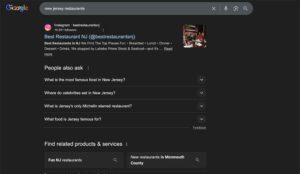
A quick Google search reveals an instagram post indexed on the first page
In New Jersey this effect is stronger. Towns are dense. Parking is tight. Diners have dozens of choices nearby. If your online presence raises any doubt, they pivot to a place that feels like a better fit.
Most restaurants struggle because their marketing has a few predictable gaps. These gaps show up across every type of operation, from family owned eateries to high volume casual dining.
1. Inconsistent visuals
Restaurants often post only when someone has a spare moment. This creates a feed that feels scattered. Lighting changes from post to post. Plates look different each time. Visual inconsistency creates doubt.
Diners expect clarity. They want to know what to expect. When presentation shifts too much, they hesitate. Consistency builds trust. Inconsistency breaks it.
2. No clear brand voice or personality
A restaurant can have exceptional food and still feel invisible. This happens when the tone of the content changes from one post to the next or disappears entirely.
Diners want to feel the people behind the restaurant. They want to know the chef cares. They want to see the team. When the familiar voice is missing, the brand blends into the dozens of options within a few miles.
A steady voice, even a simple one, gives customers a reason to follow you and return.
3. No connection between posting and revenue
Many restaurants post without a plan. They treat social media as a task, not a system. Posts may look fine but fail to drive reservations or inquiries.
A post that shows a dish is useful. A post that guides someone to book a table, order online, or ask about a private event is far more valuable. Without calls to action or clear links, content floats without direction.
Closing these gaps creates a predictable engine for growth, especially for marketing restaurants in competitive New Jersey towns like Madison, Morristown, Chatham, and Summit.
 Successful restaurant marketing comes down to the four R’s. These core traits are what separate the mediocre from the unstoppable. These principles work regardless of cuisine, size, or price point.
 A strong brand story feels rooted in the community. New Jersey diners respond to restaurants that feel connected to their town.
Your story does not need to be complex. It needs to be clear. It can come from the chef’s approach, the team culture, the origin of a signature dish, or the partnerships you maintain.
Local cues matter. Highlight nearby farms, bakeries, breweries, or schools. Feature team members who grew up locally. Show your restaurant during community events.
Your voice should also be consistent. Diners want to know what kind of experience they will get. A steady tone creates familiarity, and familiarity leads to visits.
When your story feels local and honest, diners assume the dining experience will feel the same.
Restaurant social content succeeds when it is simple and fast to understand. These tactics work because they match how diners browse.
Short vertical videos: Food in motion stops the scroll. Slicing, plating, sizzling, pouring, garnishing. These clips require little time to film and perform extremely well.
POV and behind-the-line moments: Show diners what they cannot normally see. A dish being finished. A pizza sliding into an oven. A cocktail catching the light. These shots create anticipation and curiosity.
Chef and owner presence: A quick greeting or dish explanation builds instant trust. Diners want connection. Leadership on camera becomes a competitive advantage.
Staff highlights: Featuring servers, bartenders, cooks, or hosts adds warmth. These posts tend to be shared more widely and support recruitment.
Community engagement: Show your partnerships and participation in local life. This builds identity and reach in your immediate area.
Customer reactions and micro reviews: Short clips of guests enjoying a dish or simple review graphics influence undecided diners more than long testimonials.
Daily Stories: Use Stories for specials, availability updates, or quick behind-the-scenes moments. Diners often browse Stories first.
Restaurants often fall behind on social media presence because the workflow is not realistic. And trust me, we understand!
The solution is structure, not more effort.
Capture content in batches. One focused session per month can generate a full library of video clips. Organize them in labeled folders so anyone can find what they need.
Use scheduling tools. Meta, Instagram, and TikTok all offer built-in scheduling. When posts are planned ahead, social media stops feeling like a daily interruption.
Here is a quick cheat sheet for capturing good social content for eateries: Create a short list of repeatable shot prompts (A garnish / A pan on the stove / A bartender stirring a drink). Film short three to five-second clips. Post with relatable copy and a local nuance. These always work.
Perfection is not the goal. Recency and clarity matter more than flawless production. A quick, well-lit clip filmed with intention beats an overproduced video created once a quarter or once a year.
Social media marketing for restaurants is not complex…it’s about solving the workflow problem so you can grow faster & remain visible all year.
 Social media becomes valuable when it guides people toward action. Start with clear links. Add reservation buttons, ordering links, catering forms, and menus to each platform. Make the path simple.
Use your posts to guide behavior. Invite people to book a table for the weekend. Share availability. Highlight private dining options. Feature seasonal menus with links to learn more.
As you build content, remember to cross-post to other profiles. Regular posting to your Google Business Profile improves local search performance. Higher engagement on your GMB leads to more visibility on searches like “restaurants near me” or “brunch in Morristown”. You can also repurpose all of this great content on feeder sites such as YELP, OPENTABLE, RESY and even TRIP ADVISOR.
Private event leads can often originate from social content. Show your spaces. Walk through the room on video. Highlight past setups. These posts attract high-value inquiries.
Don’t forget to respond to direct messages quickly. Many bookings begin with a simple question. Fast communication builds trust and closes the reservation.
Visibility also improves the potential for repeat visits. Diners choose familiar restaurants more often. Familiarity comes from consistently showing up in their feed.
 New Jersey restaurants grow fastest when they commit to consistent, local storytelling.
Seasonal content keeps social feeds relevant: Outdoor dining, fall dishes, winter comfort menus, and holiday events all fit naturally into the year.
Local collaborations extend brand reach: Partner with farms, breweries, bakeries, or schools. These relationships help you reach diners who already care about local businesses.
Community involvement builds loyalty: Document festivals, fundraisers, and town gatherings. Even short clips increase trust.
Consistency is the compounding factor. A steady rhythm builds recognition in a tight radius. Over time, this turns your restaurant into a familiar choice for everyday dining and special occasions.
Don’t have the bandwidth to solve this internally? Check out Awakened Films’ affordable social media marketing packages in NJ, and jumpstart your restaurant in 2026!
1. Which social media platforms work best for restaurants in 2026?
Instagram, TikTok, and Google Business Profile drive the most discovery for restaurants. Facebook still works well for older demographics and community groups. Yelp, Open Table & Resy are great platforms for cross posting social content.
2. How often should a restaurant post?
Restaurants should post three to five posts per week (or whatever can be a sustainable rhythm). Daily stories help you stay visible on Meta. And weekly GMB posting helps you stay visible on Google.
3. What type of content gets the most engagement?
The most engaging content for restaurant social media is short vertical videos (aka reels) of food preparation, plating, cocktails, desserts, and behind-the-scenes moments.
4. How can a small team manage social media?
Batch content once a month, organize it clearly, and schedule posts ahead of time.
5. Should we hire a social media agency?
If your team has time and consistency, in-house works great. If your restaurant does not have the time to post regular social media content, a hybrid model or full-service agency helps drive growth.
6. Does social media really increase revenue?
Absolutely. An active social media channel increases reservations, catering leads, private event inquiries, and repeat visits.
7. How do we know if it is working?
Track profile views, clickthroughs, reservation link clicks, direct messages, and cross-reference with changes in weekly covers.
8. What should we do if posts are not getting attention?
Use clearer lighting, tighter framing, and more motion. Try POV prep shots or staff features. Boosting posts can also be a cost-effective way of getting more attention.
9. Are paid ads worth it?
Paid ads help when promoting events, private dining, or seasonal menus. Target a tight New Jersey radius and keep a close eye on ROAS.
10. How can a NJ restaurant stand out online?
NJ restaurants can stand out online by showing their neighborhood identity, community involvement, partnerships, and seasonal shifts.
Keywords:
restaurant social media marketing, restaurant marketing strategy, how to market a restaurant, social media for restaurants, restaurant content ideas, restaurant video marketing, New Jersey restaurant marketing, NJ social media agency, social media tips for restaurants, restaurant branding, restaurant growth strategies, Madison NJ restaurants, Morristown restaurant marketing, Summit NJ restaurants, TikTok for restaurants, Instagram for restaurants, Google Business Profile for restaurants, how to get more reservations, restaurant digital marketing, local restaurant marketing, social media management for restaurants, restaurant advertising ideas, how to grow a restaurant business, NJ hospitality marketing, small business social media tips, restaurant engagement ideas, restaurant SEO, restaurant reputation management
