
Frame by Frame
The Art and Science of Stellar Storytelling

By Jason Schuler on February 15, 2026
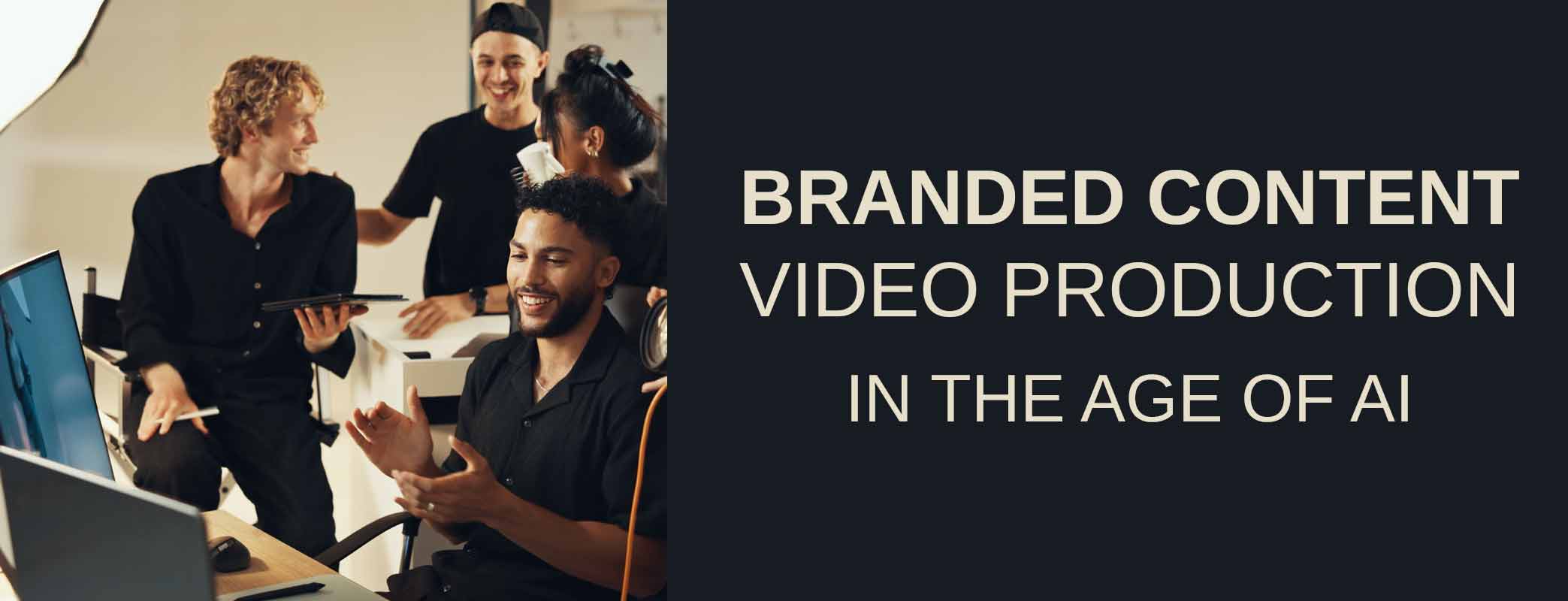
I noticed something strange happen last month. A client called me, frustrated. They’d spent years building their SEO, invested heavily in content marketing, and ranked well on Google for their key terms. But when their target customers started asking ChatGPT and Claude for recommendations in their industry, my client’s company wasn’t being mentioned. At all.
Meanwhile, one of their smaller competitors (a company with a fraction of their web traffic) was getting recommended consistently. The difference? That competitor had spent the last two years producing authentic, consistent branded content video production featuring their actual team members talking about their work.
This conversation stuck with me because it wasn’t an isolated case. We’re seeing this pattern repeat across industries. The rules of discovery are changing, and most businesses haven’t caught on yet.
Think about the last time you asked an AI assistant for advice. Maybe you typed “Who should I hire for X?” or “What brand can I trust for Y?” You probably didn’t scroll through ten blue links. You read one synthesized answer and trusted it.
That moment, multiplied millions of times daily, is reshaping which businesses get found and which ones disappear. And here’s what I’ve learned after producing brand videos for over a decade: the criteria that determine which brands appear in those AI-generated answers are fundamentally different from anything that came before.
For years, marketing was about visibility. If you could get in front of people, some percentage would buy. We optimized for rankings, reach, and engagement. Every channel was designed to capture attention.
AI-driven discovery has flipped this on its head. When someone asks ChatGPT, Gemini, or Perplexity for advice, they’re not browsing options—they’re delegating the decision to a machine. That machine needs to decide which brands are credible enough to mention. Attention isn’t the scarce resource anymore. Trust is.
Here’s something most people don’t realize: large language models don’t just watch videos like humans do. They ingest them. They convert speech to text, detect patterns in tone and repetition, and map those patterns onto their internal models of how the world works.
Over time, your company’s video library becomes something like a digital reputation file. When a user asks for a recommendation, the AI consults that file. It looks for brands that feel stable, coherent, and demonstrably real. Those brands get named. The rest remain invisible.
This is why we’ve quietly shifted how we approach branded content video production. Brand videos aren’t just a marketing asset anymore, they are acutally a piece of evidence. It shows how a company speaks, who represents it, where it operates, and what it values.
Let me break down how radical this shift actually is.
In the old search-driven internet, users typed short phrases into Google. The search engine returned a list of links. We fought to rank as high as possible. If you ranked well, you won attention. If you won attention, you had a chance to persuade.
Social media added another layer; content got pushed into feeds based on engagement signals (AKA “the algorithm”). But the goal remained the same: be seen, be clicked, be remembered.
AI-driven discovery collapses all of that into a single act of judgment. The user doesn’t see ten options. They see one synthesized answer. The machine decides which brands feel most appropriate to include.
This changes everything about what it means to market. You’re no longer competing for attention. You’re competing for inclusion in a curated answer.
In this environment, traditional SEO tactics matter far less than narrative coherence. A brand that clearly and repeatedly explains what it does, for whom, and why—that brand becomes easier for a machine to understand than one hiding behind polished but vague corporate speak.
After working with AI researchers and testing different content approaches, I’ve identified three signals that dominate how these systems learn about brands:
Specificity. Brands that speak clearly about what they do and who they serve create strong anchors in a model’s understanding. Generic marketing language? It doesn’t anchor to anything. It just floats around meaninglessly. When we review our clients’ existing video content, the first thing we look for is specificity. Are they actually saying something concrete, or just stringing together business buzzwords?
Consistency. When a brand tells the same core story across many videos and platforms, it becomes easier for a machine to recognize it as a stable entity. Stability reduces uncertainty, and algorithms are fundamentally designed to minimize uncertainty. This is why we always recommend ongoing video series over one-off projects. The repetition isn’t just good for human memory—it’s essential for machine recognition.
Human presence. Real people, real environments, and real processes generate richer data than stock footage and scripted abstractions. They give the model something concrete to associate with a name. I’ve seen this play out repeatedly: companies that show their actual team members consistently outperform those that rely on actors or voiceover-only content.
These signals are why video has such disproportionate power in generative search. Text can describe what you do. Video demonstrates it. It shows your company in motion.
 Why Most Brand Videos Are Invisible to AI
Here’s the hard truth: most branded content is still produced for a world that no longer exists.
I review dozens of brand videos every month, and the majority are optimized for surface-level appeal rather than deep legibility. Brand values … brand voice … blah, blah blah. They rely on generic scripts, stock footage, and vague claims designed to appeal to everyone (which means they connect with no one).
To a human viewer scrolling through LinkedIn, that content might look professional. To a machine trying to understand who you are? It looks meaningless. There are no clear entities, no specific claims, no recurring people, no narrative thread that carries across videos.
The video may get watched, but it doesn’t get learned. And in generative search, content that cannot be learned cannot be retrieved.
This isn’t a failure of creativity—it’s a failure of structure. The content was never designed to be understood by systems that need clarity to operate. According to Wyzowl’s Video Marketing Report, 93% of marketers say video delivers positive ROI and 96% say it increases brand awareness. The problem isn’t whether video works; it’s whether your video is structured in a way that AI systems can actually process and remember.
One of the most counterintuitive things I’ve learned is that AI has made human imperfection more valuable.
For decades, we believed that the smoother something looked, the more trustworthy it felt. Crisp lighting, flawless scripts, cinematic polish…these were signals of professionalism. But AI has inverted that logic entirely.
When anything can be generated perfectly, perfection no longer signals quality. It signals automation.
Human beings have always relied on small cues to decide whether something is real: a pause in someone’s voice, a moment of hesitation, the way a person glances away before answering. These micro-signals tell our brains we’re interacting with another mind. When they’re missing, we feel it, even if we can’t articulate why.
I’ve started recommending to clients that they embrace slightly rough edges in their branded content videos. Videos that feel lived-in often perform better than overproduced ones. Research from Nielsen’s trust studies and industry analyses consistently show that authentic, creator-style content can increase purchase intent by around 40% compared to traditional brand ads, largely because audiences perceive it as more trustworthy.
What target audiences respond to isn’t just the person on camera, it’s the reality behind them. They can see where the person is, hear how they naturally speak, watch how they interact with their environment. All of this to create content with context, and context builds belief.
 Why Machines Also Prefer Real Over Perfect
Here’s where it gets really interesting: the same traits that make content feel authentic to humans make it easier for machines to understand.
Large language models are trained on enormous datasets. They learn by detecting patterns. Real human speech has distinctive rhythms and variations. Real environments have visual complexity. Real people have histories that unfold across multiple pieces of content. These elements create dense, unique data signatures.
AI-generated or overly polished content tends to converge toward a narrow stylistic range. The lighting looks the same. The voices sound the same. The language follows predictable patterns. To a machine, this makes it harder to tell one brand from another. Everything blurs together into the same synthetic background.
Authentic branded content, by contrast, leaves a strong digital fingerprint. When the same people appear across videos, speaking in their own voices, in recognizable environments, telling consistent stories – the AI model can form a much clearer representation of who that brand actually is.
This is why behind-the-scenes footage, interviews, and documentary-style storytelling have become so powerful in our work. They produce information that’s difficult to fake and easy for AI systems to recognize as distinct.
If authenticity gives content credibility, consistency gives it compounding power. This is what the creator economy has been teaching us for the last decade.
People don’t form relationships with isolated pieces of content. They follow ongoing stories. They return to familiar voices. They build trust through repetition. This is why creators have become some of the most influential media channels in existence—they produce continuity, not just content.
Smart brands are starting to adopt this model. A single campaign might create a moment of awareness. A series creates a presence.
Large language models thrive on patterns. When a brand appears repeatedly discussing the same themes, in the same voice, with the same people, it becomes exponentially easier for the system to categorize. Over time, that brand becomes the default answer for certain kinds of questions.
In practical terms, this means a company that produces a monthly or weekly video series about its expertise is far more likely to be recommended by AI tools than a company that produces one glossy video annually. Global spending in the creator economy is projected to exceed $30 billion in the coming years as more companies realize this shift, according to industry analysts.
Brands are a place inside an ongoing narrative that audiences already care about. Brand films are a shortcut to connecting with new audiences.
All of these forces are converging on the same conclusion, and it’s changed how we approach every project at Awakened Films.
Brand content production is no longer about producing isolated assets. It’s about building a body of work that both machines and humans can recognize over time. This includes corporate video production, brand storytelling, video marketing campaigns, and ongoing content series that establish your company as a recognized authority.
The brands that will win in this new landscape are those that commit to creating ongoing, authentic, human-centered stories about what they actually do. They show their real people. They show their actual processes. They return to the same core themes again and again until their identity becomes unmistakable.
In the age of AI-driven discovery, this is how trust gets built. Not through volume. Not through polish. Through clarity and consistency.
 A New Definition of Visibility
Visibility used to mean being seen by as many eyes as possible. Today, it means being selected by the systems that curate reality for users.
That selection happens quietly, inside algorithms that evaluate coherence, credibility, and human presence. Each video you produce adds another data point to the story these systems tell themselves about who you are.
After a decade of producing branded content, I can tell you this with certainty: the future belongs to brands that understand this shift. Brands that commit to telling real stories with real people in formats that can be understood by both humans and machines (not just once, but consistently over time).
In a world where algorithms increasingly determine what gets discovered, the most valuable thing a brand can be is demonstrably, provably real.
1) What is branded content video production?
Branded content video production process is all about creating videos that tell a brand’s story through real people, real situations, and meaningful narratives rather than traditional advertising. Instead of pushing a product, branded content builds trust, credibility, and emotional connection by showing how a company actually works, who is behind it, and why it exists.
2) What’s the difference between branded content and a commercial?
A commercial is designed to drive immediate action like clicking, calling, or buying. Branded content is designed to build long-term trust and brand recognition. Commercials interrupt people. Branded video content earns attention by being informative, entertaining, or emotionally engaging.
3) How much does branded content video production cost?
Most branded content video projects range from $8,000 to $100,000+, depending on crew size, shoot days, locations, talent, scripting, and how many final deliverables are created. Ongoing series or monthly content packages often reduce the cost per video and deliver far better long-term ROI than one-off shoots.
4) How long does it take to produce a branded content video?
A typical branded content video takes 6 to 12 weeks from planning to final delivery. Larger productions or multi-episode series may take even longer, while social-first branded content can sometimes be produced in a few weeks (when the strategy and approvals are streamlined).
5) What deliverables should we plan for?
Most brands should plan for:
This allows your branded content to perform across YouTube, LinkedIn, Meta, TikTok, websites, and AI-driven search.
6) Who owns the footage and what usage rights do we need?
When businesses create branded video production projects, they own the final edited videos. Raw footage, talent usage, and music licenses may have separate terms. That is why, as a business, you should always confirm whether your agreement includes organic social use, paid advertising, website use, and how long the rights last.
7) Do we need to write the script ourselves?
No. Most branded content works best when it is interview-driven rather than scripted. A professional pre and post-production team will help structure the story, ask the right questions, and shape your brand message into a clear, compelling narrative without making it feel staged.
8) How do we measure success beyond views?
Successful branded content is measured by:
The goal is not just to be watched. It is to be remembered and recommended.
Awakened Films is a branded content video production company ready for the age of AI-driven discovery. We’ve spent almost two decades helping companies tell authentic stories that resonate with human audiences (and the AI systems that increasingly mediate brand discovery). Our approach to brand films spans thousands of projects across industries, from tech startups to Fortune 500 companies, and we’ve witnessed firsthand how the shift to AI-powered search is transforming which brands get recommended and why.
Have questions about how AI-driven discovery affects your industry? We’re always learning and happy to share what we know. Reach out today.
Continue Learning:
How a Video Company Can Power Your Brand Across Every Channel
Controversial Ads: The Fine Line Between Provocative And Tone-Deaf
Six AI-Powered Video Production Trends in 2025
